4 – 14 July 2026 · Morven & Daan · One car

Serbia &
Kosovo,
by road.

Ten days, one loop. We start at Belgrade's fortress rivers, sleep in a timber cabin above an emerald lake, watch griffon vultures over the Uvac meanders, walk an Ottoman bazaar town, reach the contested monasteries of Kosovo, and drive home along the Danube through the Iron Gates.

~1,450 km 2 cabins 2 border crossings 4 UNESCO sites
THE LOOP · ~1,450 KM BELGRADE NOVI SAD ZAOVINE UVAC NOVI PAZAR STUDENICA PRIZREN PEJA DEČANI NIŠ ĐERDAP GOLUBAC SMEDEREVO Serbia Kosovo leg Danube return

The route

Ten days, four bases, one loop.

We drive west into the mountains, south across the border, then home along the Danube. Solid rail = Serbia; dashed = the Kosovo leg. Drive times are the driving alone — add stops, coffee and border queues.

Day 01 · Sat 4 Jul

Belgrade — the city that refuses to fall

We land, drop our bags and leave the car for later — Belgrade is a walking city, and parking is a fight we don't need. We head straight for Kalemegdan at golden hour, where the fortress terrace hangs over the exact point where the Sava pours into the Danube. Dinner in Skadarlija, the old bohemian lane of kafanas and live tamburica.
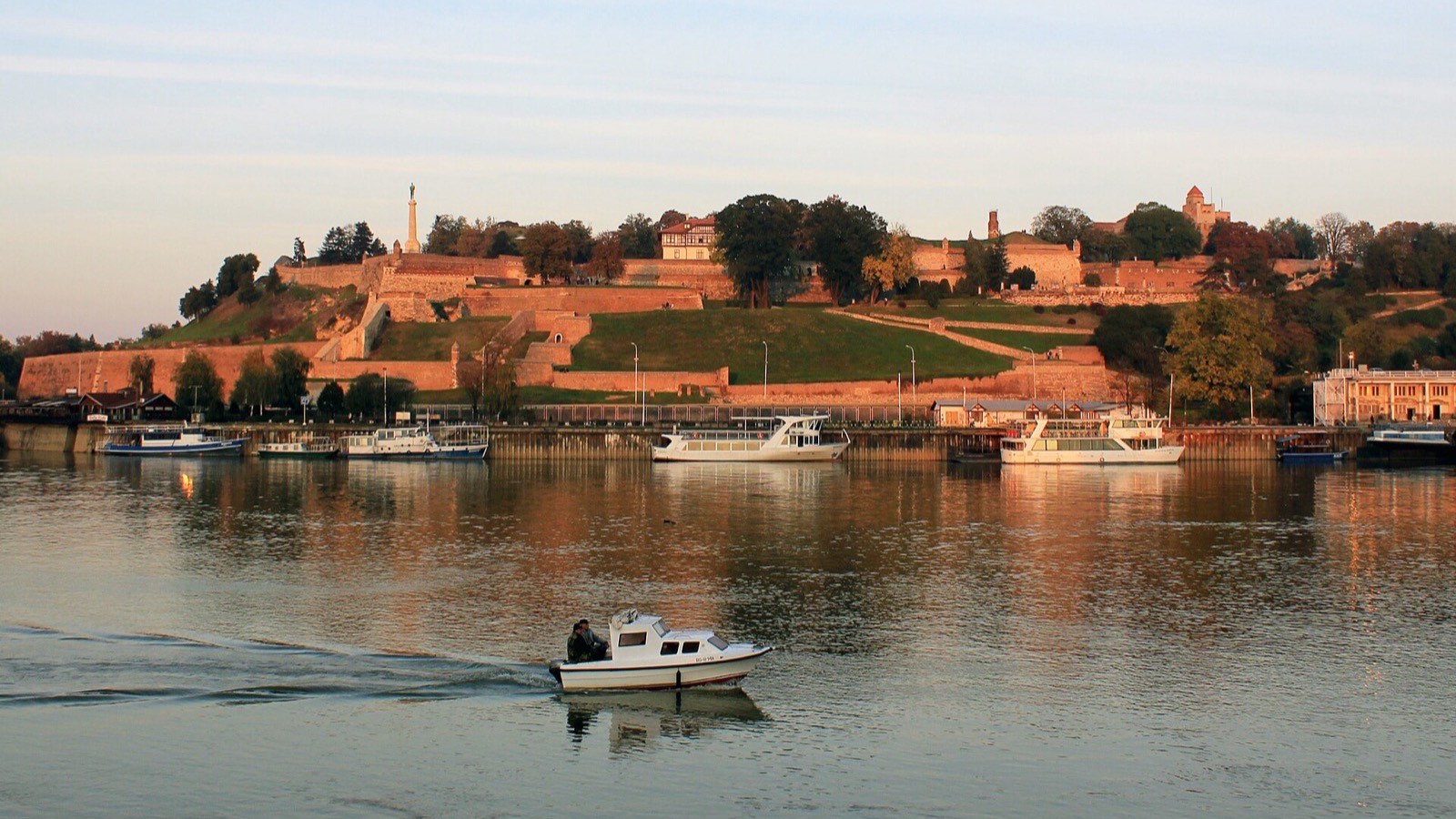
Fortress walls above the meeting of two rivers, evening light
Kalemegdan — the terrace above the confluence, where every empire wanted to stand.
Context

Belgrade may be the most fought-over city in Europe. The Celts settled it as Singidunum; Rome, Byzantium, the Ottomans and the Habsburgs each held it in turn, and it was destroyed and rebuilt dozens of times. For three centuries its fortress was the front line between the Ottoman and Austrian worlds.

In the centre, the bombed-out Generalštab (Yugoslav Army HQ) still stands as NATO's 1999 air campaign left it: kept as a ruin, part memorial, part argument. Recent history here isn't in a museum; it's on the street.
Day 02 · Sun 5 Jul

Novi Sad, by train

35 min by rail, no caroptional swim · Štrand

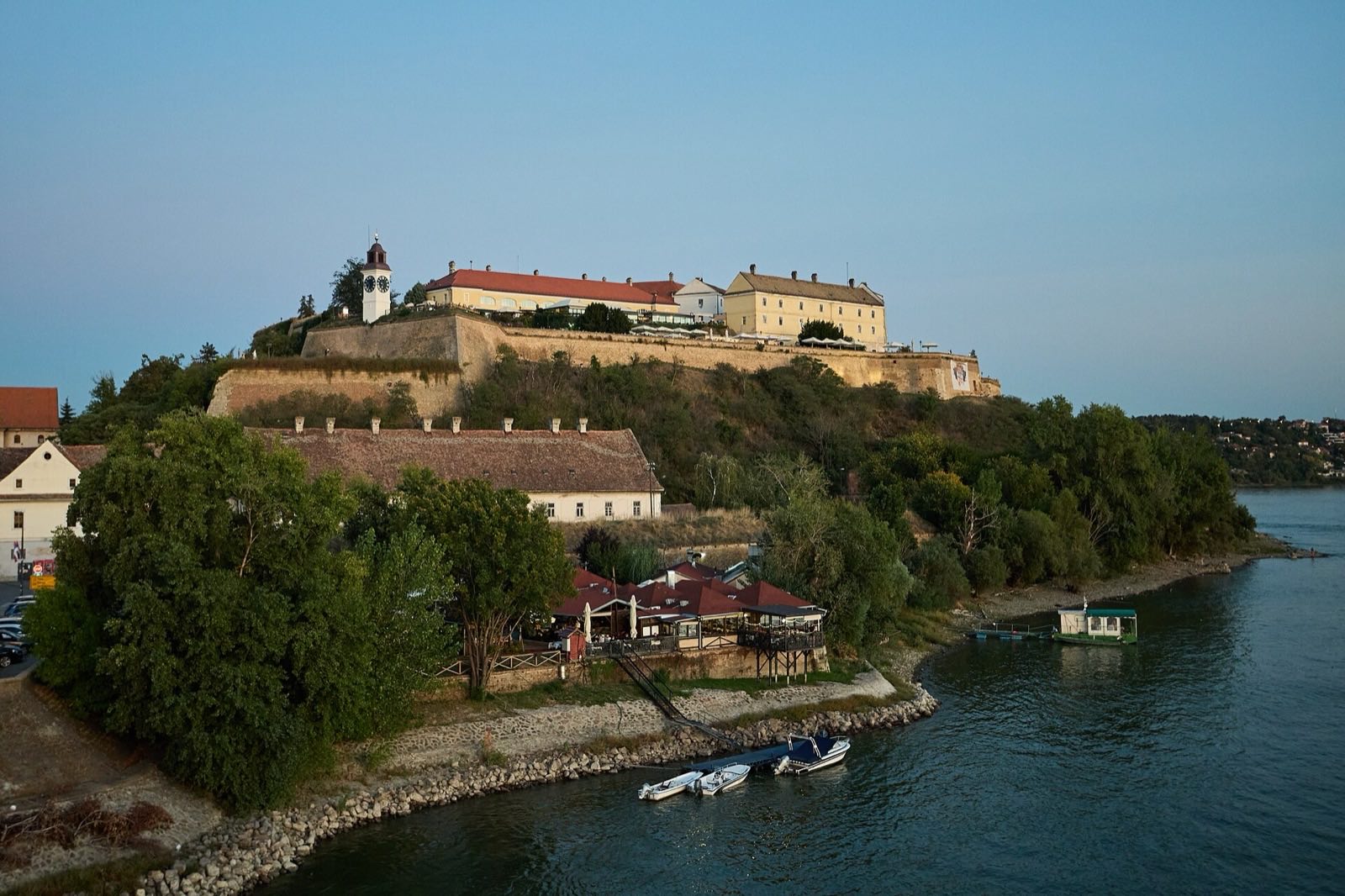
The fast train makes Novi Sad an easy day out. We climb to Petrovaradin — the "Gibraltar of the Danube" — then wander the pastel Habsburg old town. If it's hot, we head for Štrand, the city's famous sandy Danube beach, ten minutes' walk from the centre.

Fortress clock tower with the Danube and city below
Petrovaradin — note the reversed clock: the long hand shows hours, so fishermen on the river could read it from afar.
Context

Vojvodina feels like a different country: flat, Habsburg, Central European. Petrovaradin's tunnels run 16 km deep into the rock, and the fortress never fell to a direct assault. We're here on purpose before EXIT festival (9–12 Jul) packs the casemates with 200,000 people.

Day 03 · Mon 6 Jul

West, into the pines — Zaovine cabin

~3.5–4 h drive

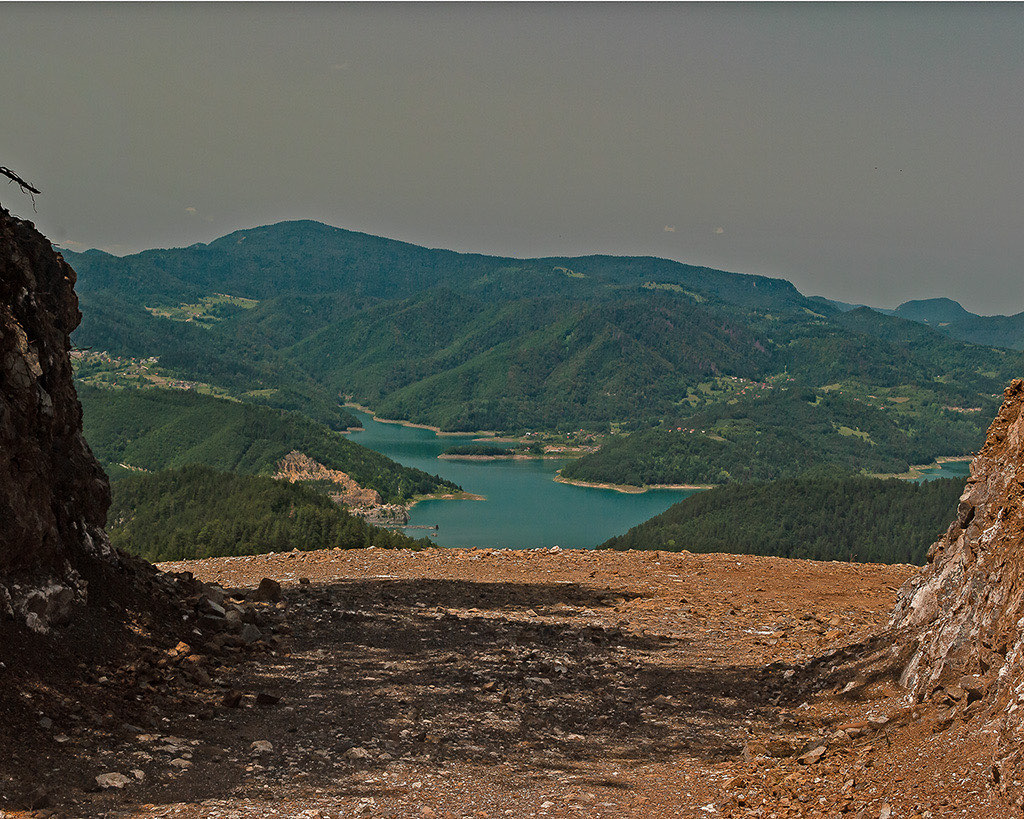
We collect the car and drive west onto the Zlatibor plateau. First stop is Sirogojno, an open-air museum of ~50 original timber highland houses; if time allows, the Gostilje waterfall is 30 minutes off the route. Then we drop into Tara National Park and the Zaovine lake plateau — home for two nights in a wooden cabin above the water.

Emerald lake between forested ridges
Zaovine — a reservoir the colour of bottle glass, inside Tara NP.
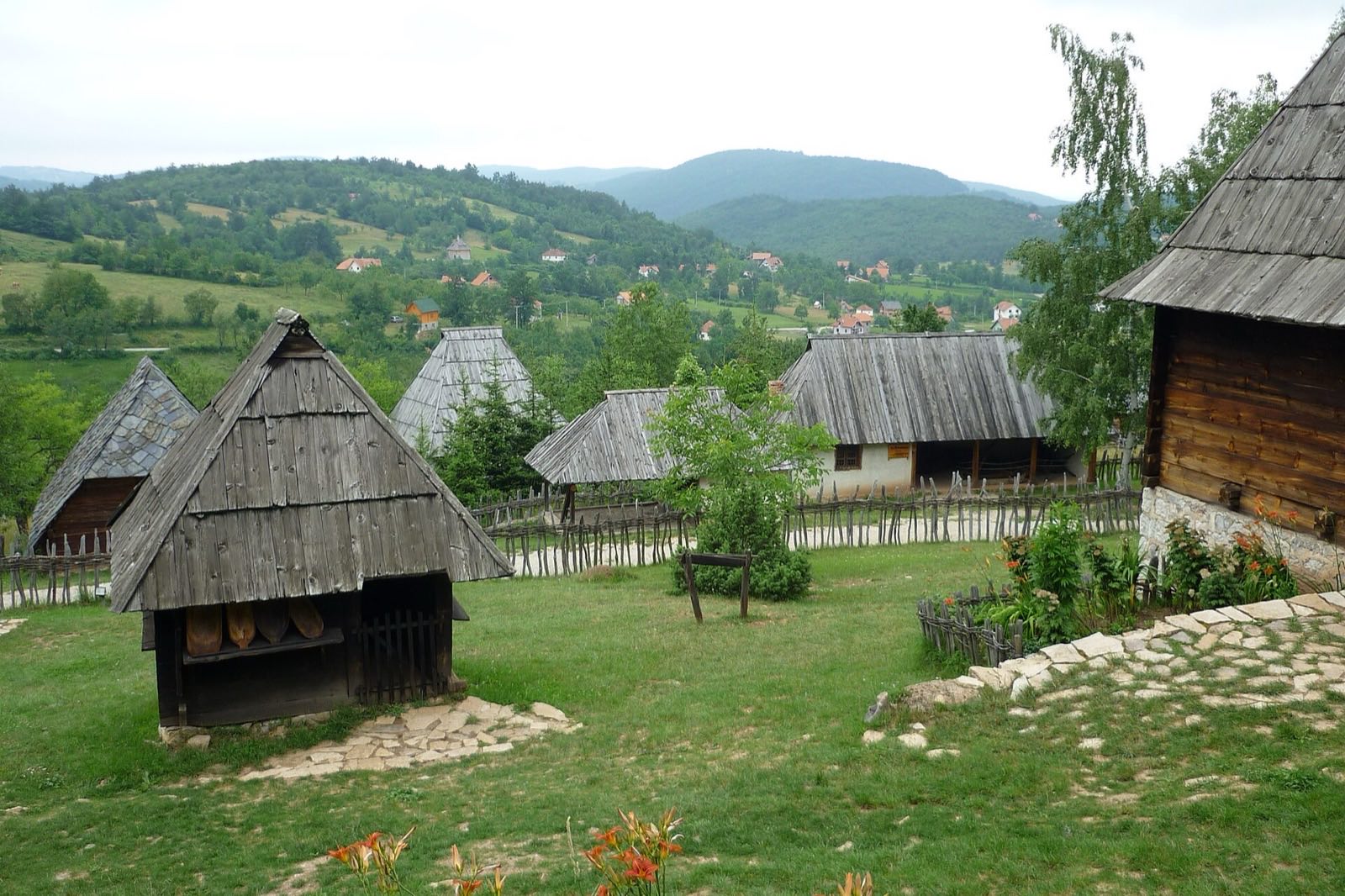
Steep-roofed timber houses on a green hillside
Sirogojno — the highland vernacular: whole houses of wood, built without a single nail in the oldest examples.
Context

Tara is one of the last strongholds of the Balkan brown bear, and of the Pančić spruce — a living-fossil conifer that survived the ice ages only in the Drina canyon. The cabin culture here (the brvnara) isn't tourism kitsch; it's how people have always lived in these mountains.

Day 04 · Tue 7 Jul

The Drina day — canyon, railway, river house

~180 km loop, slow roadsswim day · Perućac

We start early. This is our fullest day. First the Šargan Eight, a narrow-gauge railway that climbs 300 m through 22 tunnels in a figure of eight. Next door sits Drvengrad, the timber village the film director Emir Kusturica built from scratch for a movie and never took down. After lunch we stand on Banjska Stena, the balcony over the Drina canyon, the lake glowing green far below. We finish at Perućac: a swim off the little beach, and a look at the tiny house on its rock mid-river.

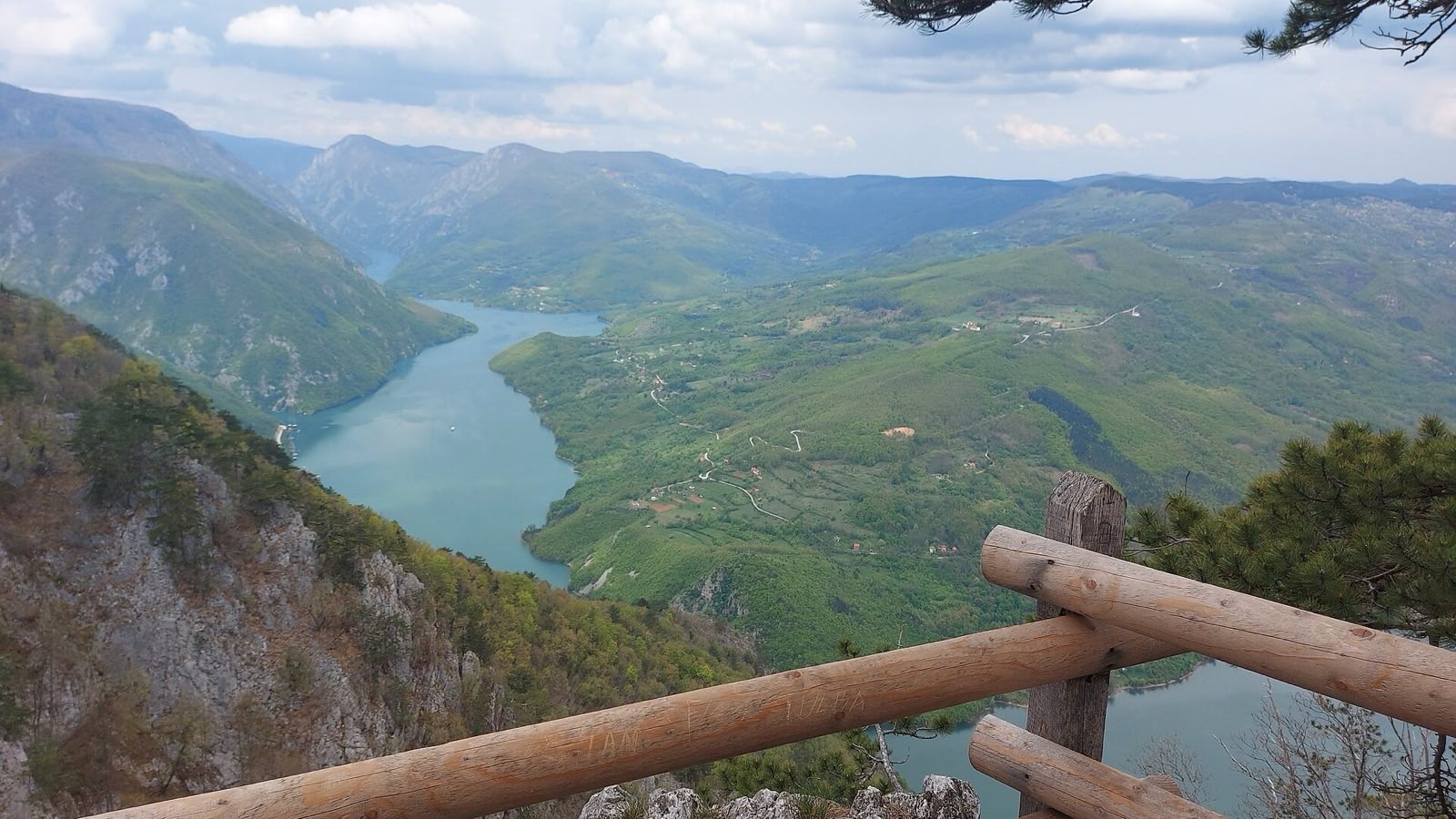
Cliff-edge view over the emerald Drina reservoir
Banjska Stena — the Drina, 300 m below, and the border with Bosnia.
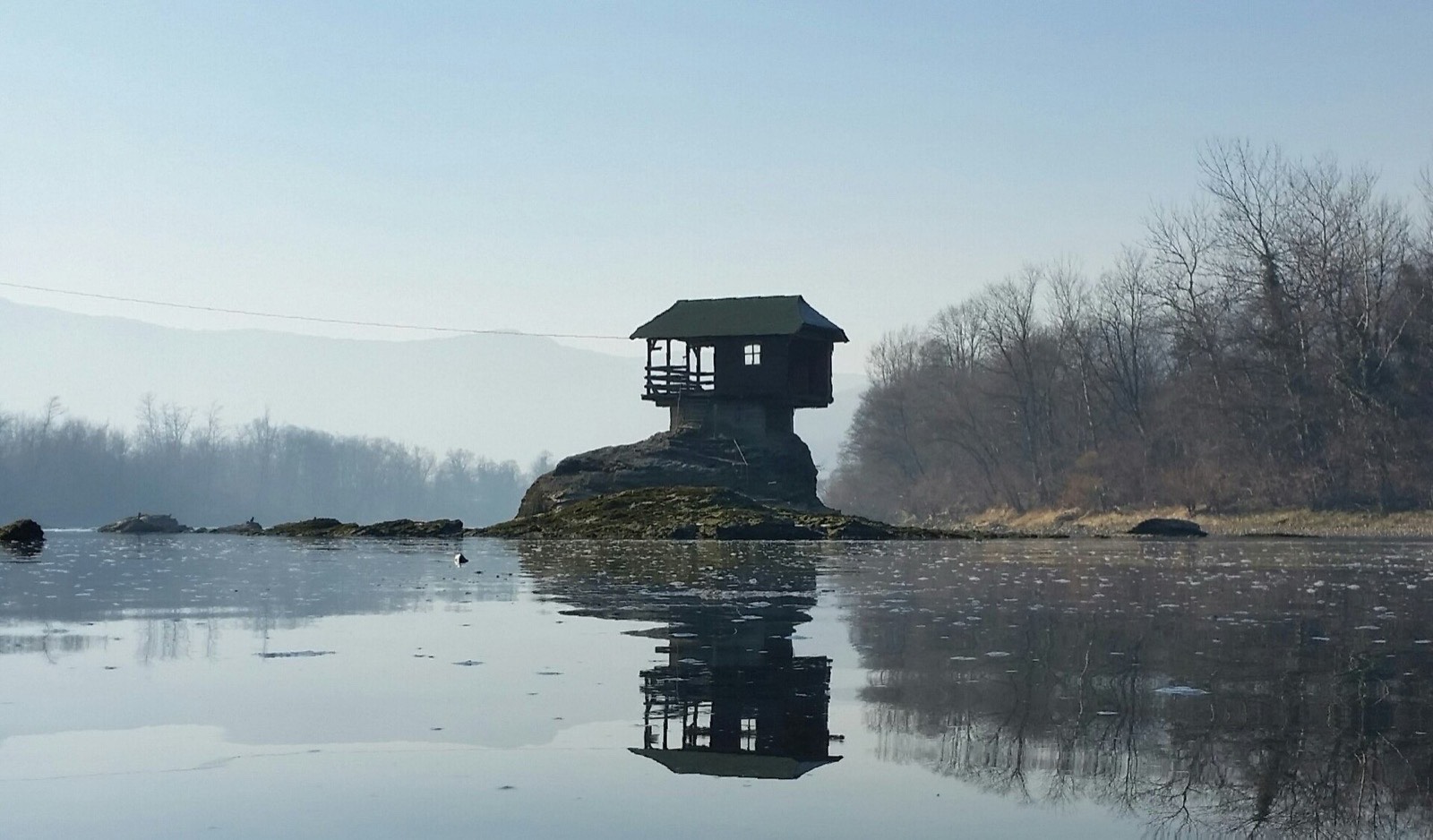
Tiny wooden house on a rock in the middle of the river
The Drina house — built by swimmers in 1968 as a place to rest; flood after flood took it, and they rebuilt it every time.
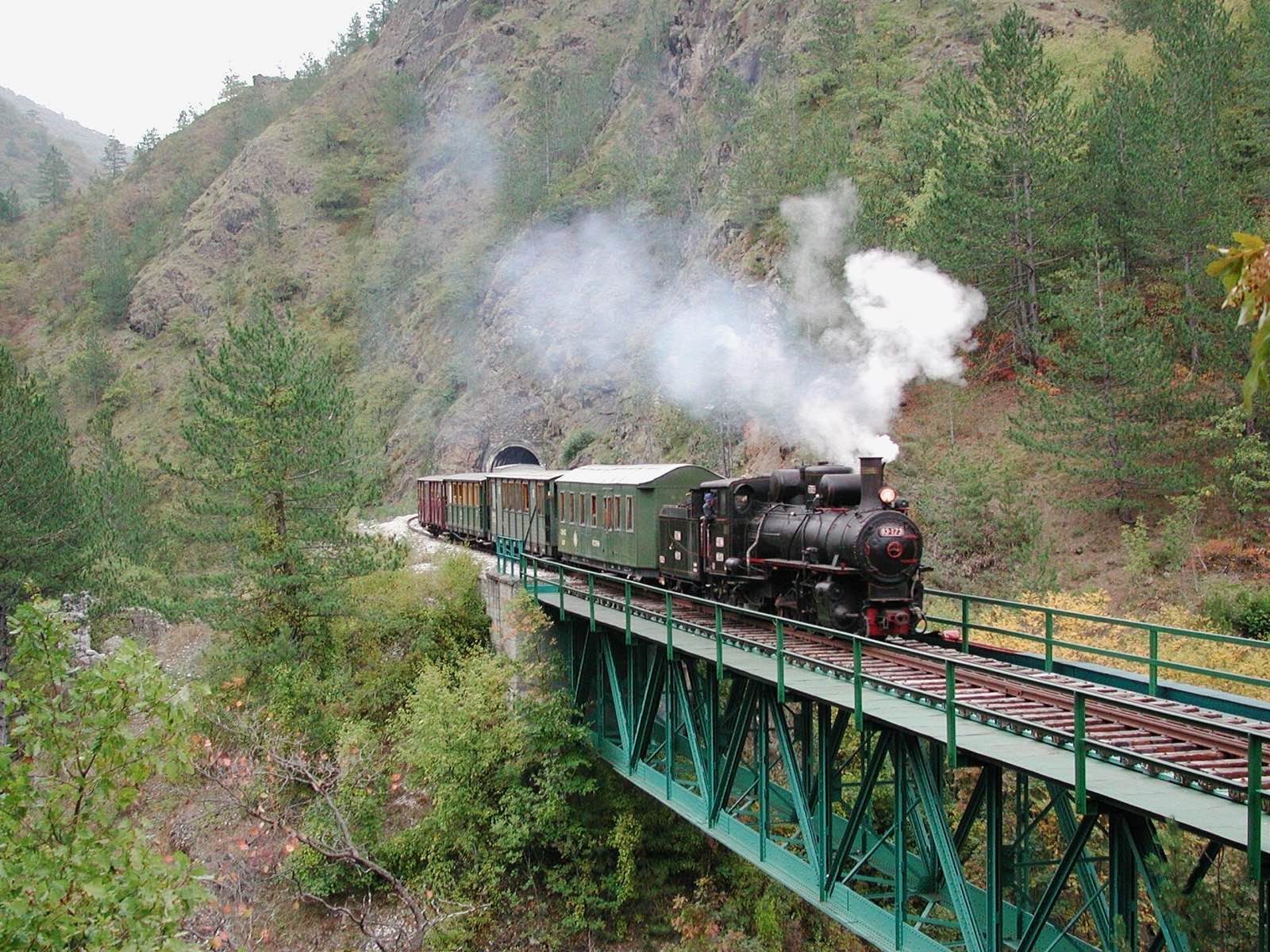
Heritage train on a mountain curve
The Šargan Eight — engineering as scenery: the track loops over itself to gain height.
Context

The Drina is no ordinary river. For centuries it was the fault line between Ottoman Bosnia and Serbia, the river of Ivo Andrić's Nobel-winning The Bridge on the Drina. From Banjska Stena, the far bank is another country.

Day 05 · Wed 8 Jul

Uvac meanders, then the bazaar town

~1.5 h + ~2 h

We pack up and leave early. Uvac is best in the morning, when the water is still and the griffon vultures ride the first thermals. We boat through the switchback meanders, duck into the ice cave, then climb to the Molitva viewpoint for that view — book the boat ahead. From there we cross the Pešter plateau to Novi Pazar for the night: minarets, a bazaar quarter, and the best mantije (meat pastries) in Serbia.

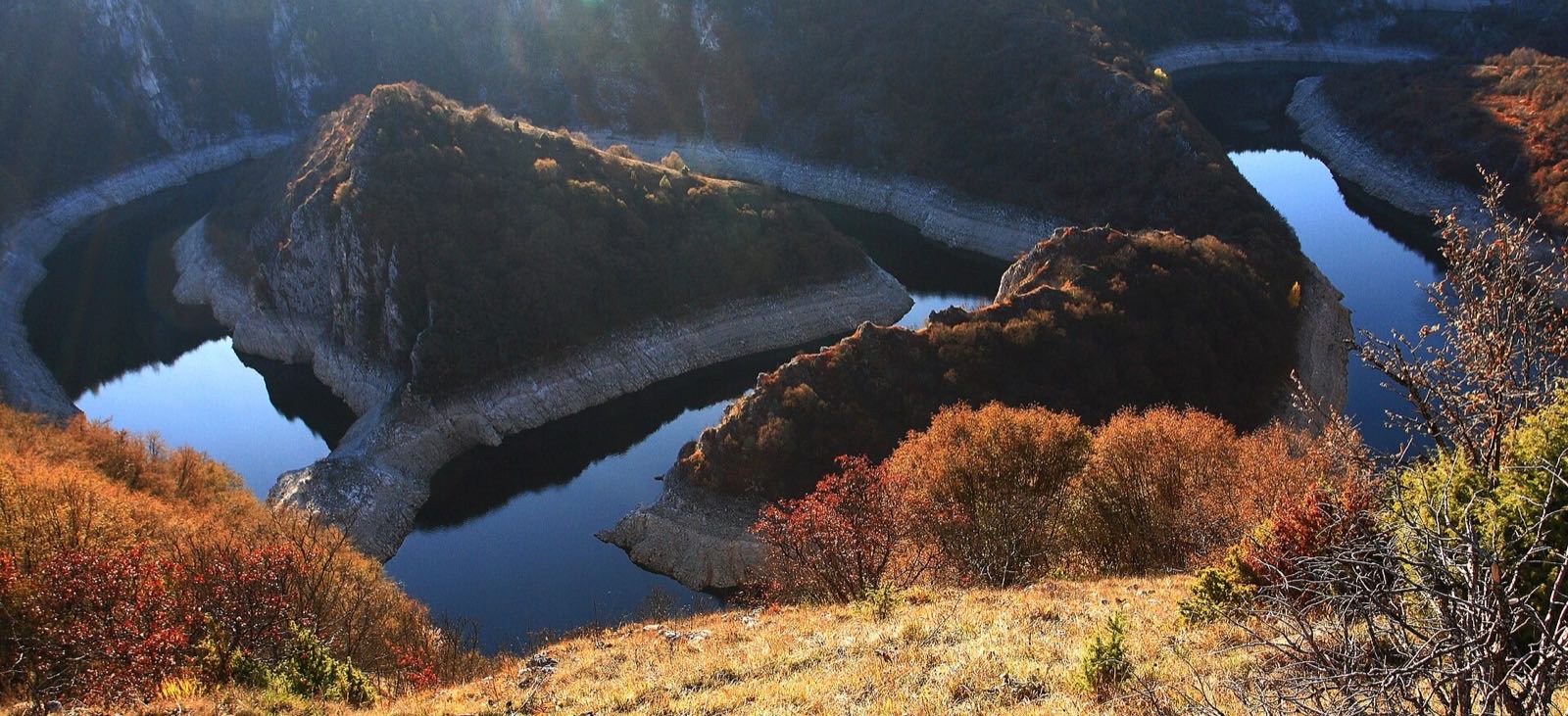
The signature S-curves of the Uvac canyon from above
Uvac from Molitva — the river folded back on itself, vultures overhead.
Context

Uvac is Serbia's flagship nature reserve, and the reason the griffon vulture — wingspan up to 2.8 m — didn't vanish from the Balkans. From a few dozen birds, the colony here now runs into the hundreds.

Novi Pazar is the capital of the Sandžak, Serbia's Bosniak-Muslim heartland, Ottoman since the 15th century and it shows: the skyline is minarets, the old town is a bazaar. Yet within 30 km stand the oldest monuments of Orthodox Serbia. Two worlds, one valley.

Day 06 · Thu 9 Jul

Carry a stone up, then cross the border

~1 h + ~3–4 h incl. borderSRB → RKS · Merdare

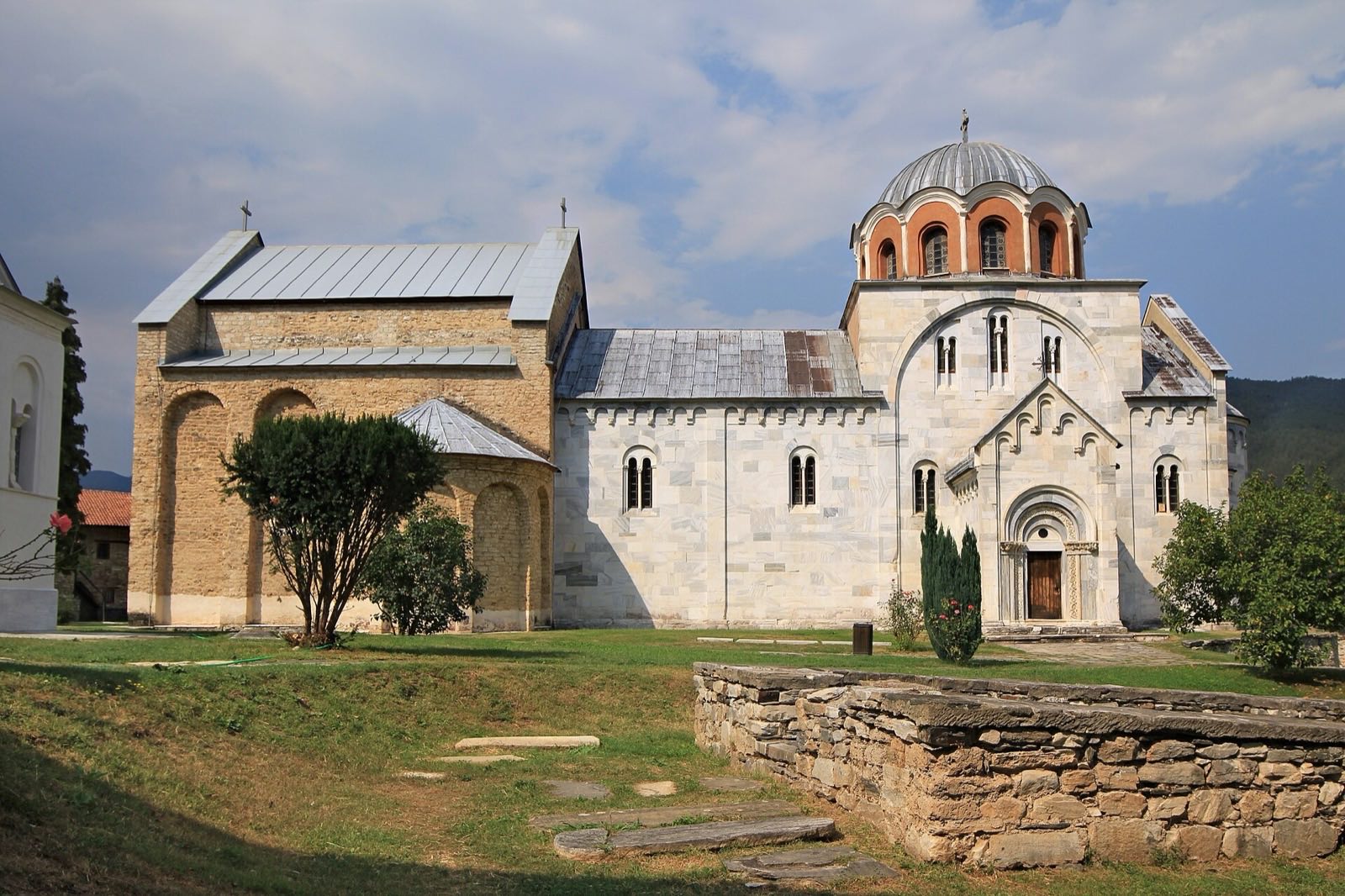
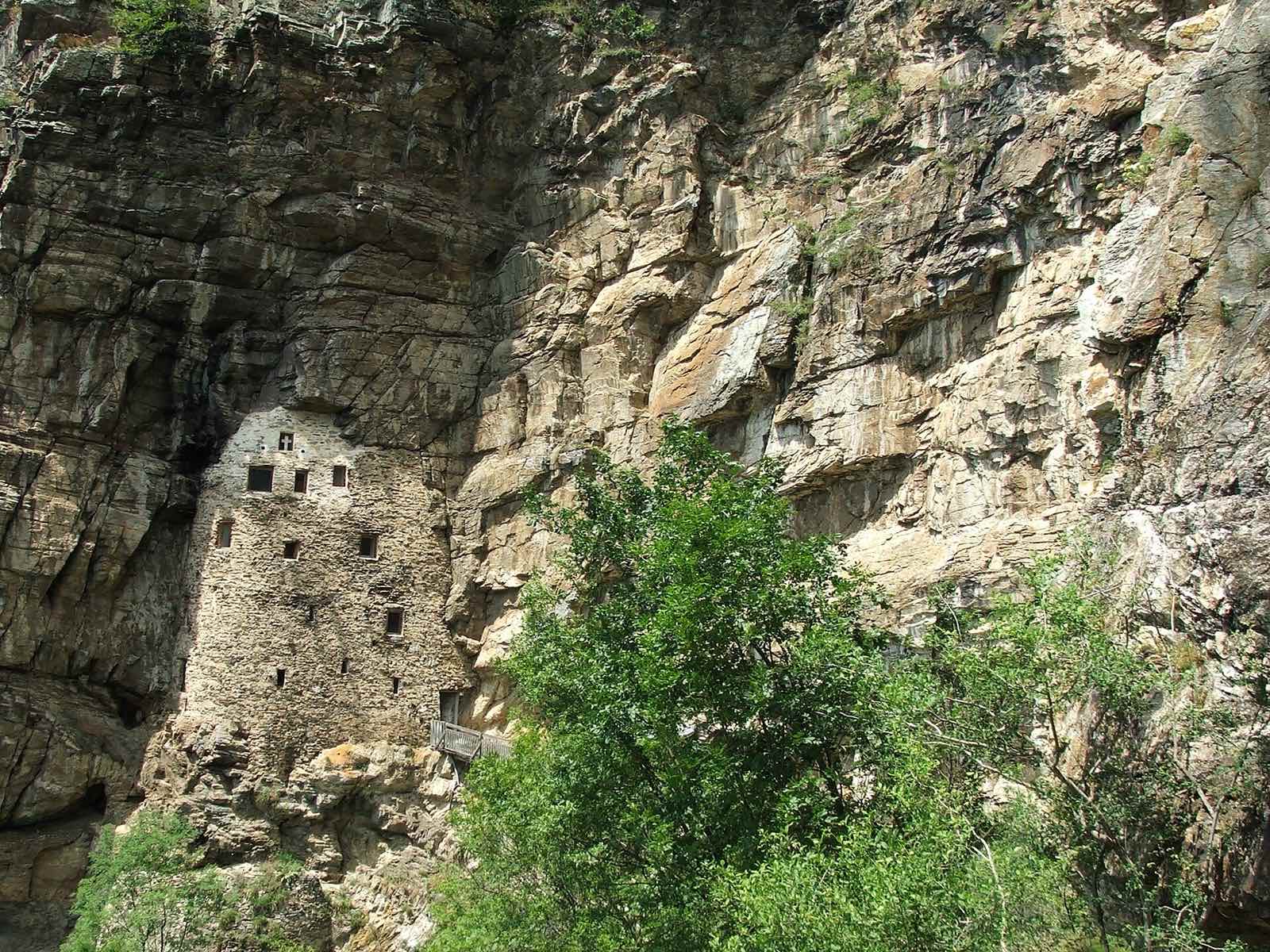
We spend the morning at Studenica, the mother-church of medieval Serbia: white marble under frescoes eight centuries old. Then the hike you flagged, up the gorge above the monastery to the Upper Hermitage of St Sava, cells built into the cliff face. Pilgrims carry a stone up the trail as a small offering to the hermitage, so we grab one from the river. In the afternoon we cross into Kosovo and drop down to Prizren for two nights.

White marble church inside a walled monastery ring
Studenica — founded c. 1190 by Stefan Nemanja, the dynasty's founding father, who ended his life here as a monk.
Hermitage buildings clinging to a cliff face
The Upper Hermitage — where St Sava, Serbia's first archbishop, withdrew to write. Reached only on foot.
Context

Studenica is where the Serbian medieval state begins: the Nemanjić dynasty's founding monastery, UNESCO-listed for frescoes that pioneered a new realism a century before the Italian Renaissance.

The border: Serbia does not recognise Kosovo's independence, so to Belgrade this is legally an "administrative line" and to Pristina an international border. For us that comes down to one rule — enter and leave Kosovo via Serbia proper, and buy Kosovo third-party insurance at the crossing (~€15–30, cash).

Day 07 · Fri 10 Jul

Prizren & the Peja day

~1.5 h each way

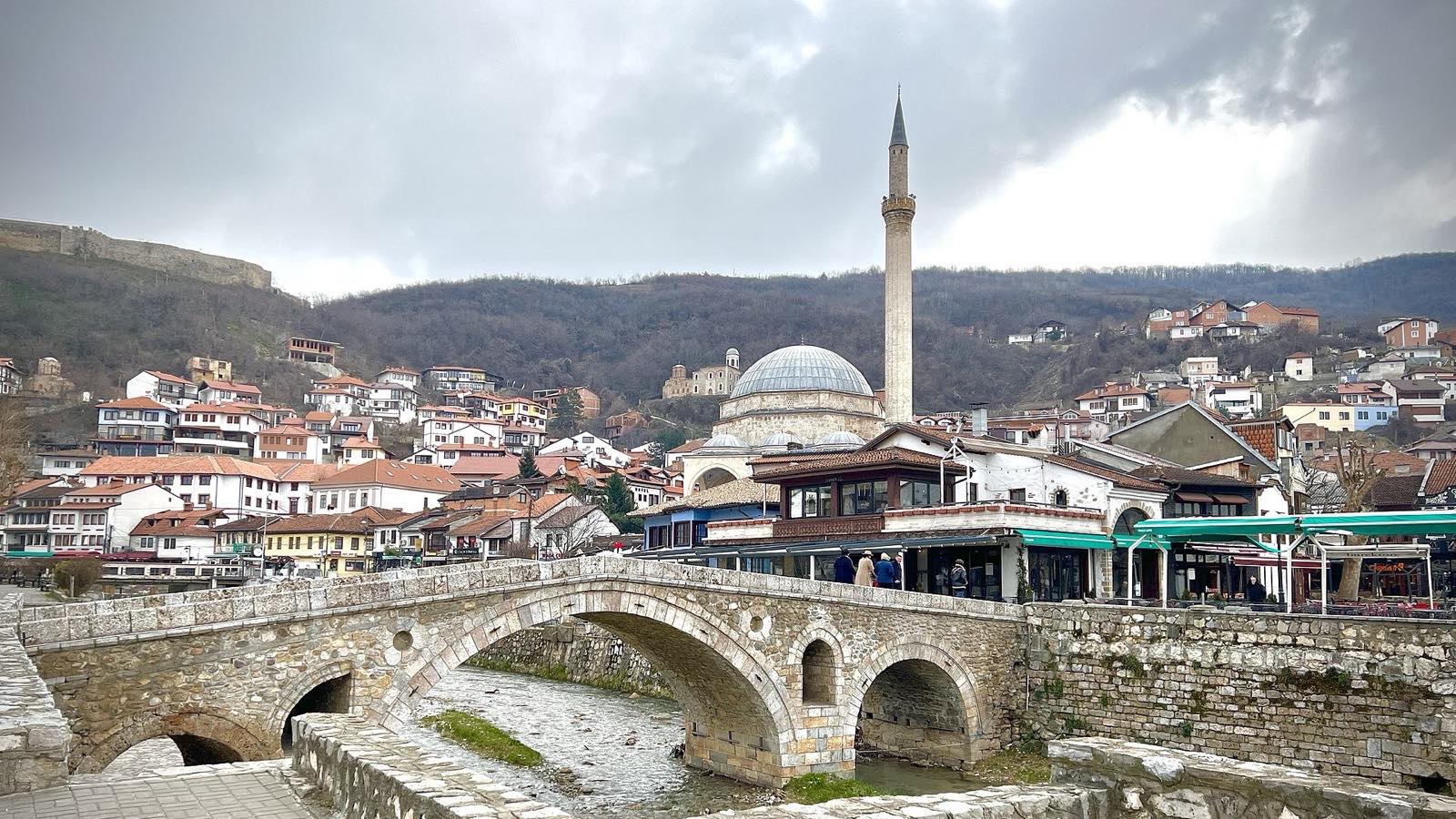
We start with Prizren: the stone bridge, the Sinan Pasha Mosque, then the climb up to the fortress for the view over a sea of red roofs and minarets. In the afternoon we drive north to Peja — into the Rugova canyon at the foot of the Accursed Mountains, on to the Patriarchate of Peć, and last Visoki Dečani, a 14th-century marble monastery still guarded by NATO peacekeepers.

Ottoman old town along the river, fortress hill behind
Prizren — the best-preserved Ottoman town in Kosovo, and its cultural capital.
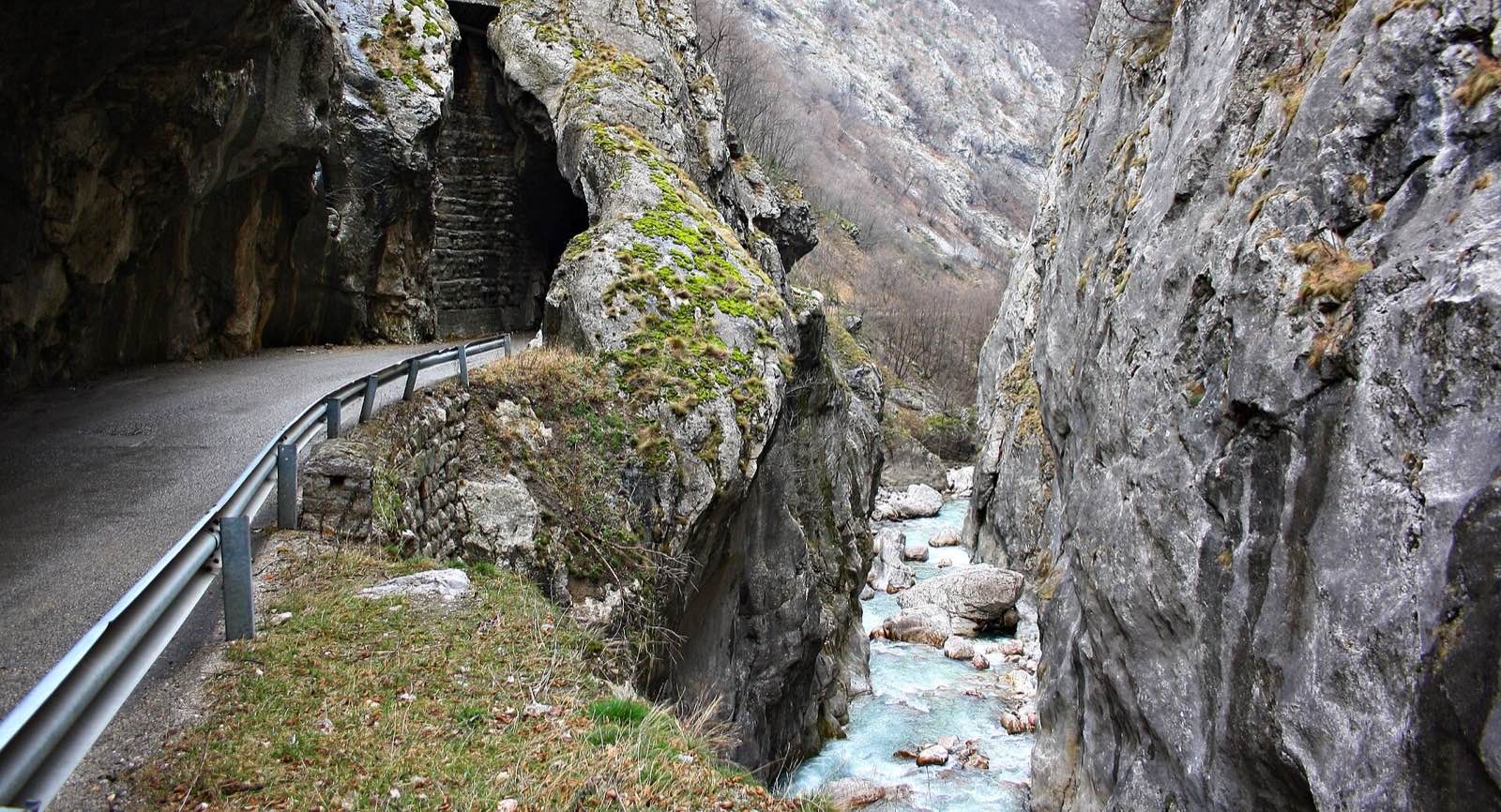
Sheer canyon walls with the road threading through
Rugova — the gorge into the Prokletije, the "Accursed Mountains".
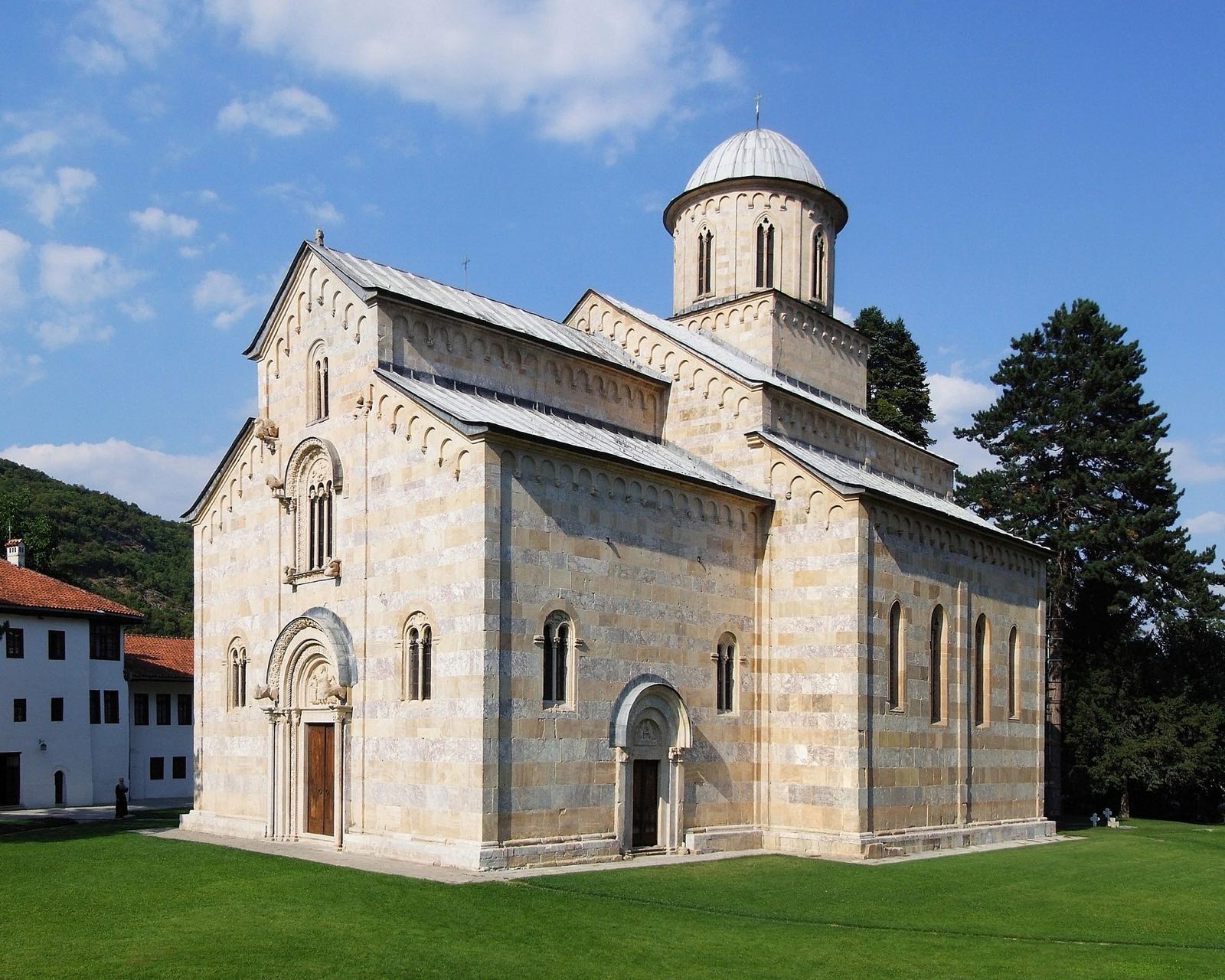
Marble monastery church among chestnut trees
Visoki Dečani — a medieval church under armed international guard: the whole Kosovo question in one image.
Context

Prizren was the seat of the Serbian Empire under Tsar Dušan in the 14th century. It was also, in 1878, the birthplace of Albanian nationalism: the League of Prizren met here to demand Albanian autonomy from the Ottomans. Both nations' founding stories run through the same small town.

Dečani holds the largest surviving ensemble of Byzantine fresco painting anywhere, and has been under KFOR protection since 1999. Visits are possible; carry passports and dress modestly.

Day 08 · Sat 11 Jul

The long haul north — via the Skull Tower

~6–7 h totalRKS → SRB · Merdare

This is our heaviest drive, and we break it on purpose in the middle. We leave Prizren on the Pristina highway, exit Kosovo at Merdare, and give Niš two to three hours: the Skull Tower and the Red Cross concentration camp. If we still have the energy, Đavolja Varoš — a valley of eroded earth pillars — sits near the route before Niš. Then we push north-east to the Danube and sleep in a riverside cabin at Donji Milanovac.

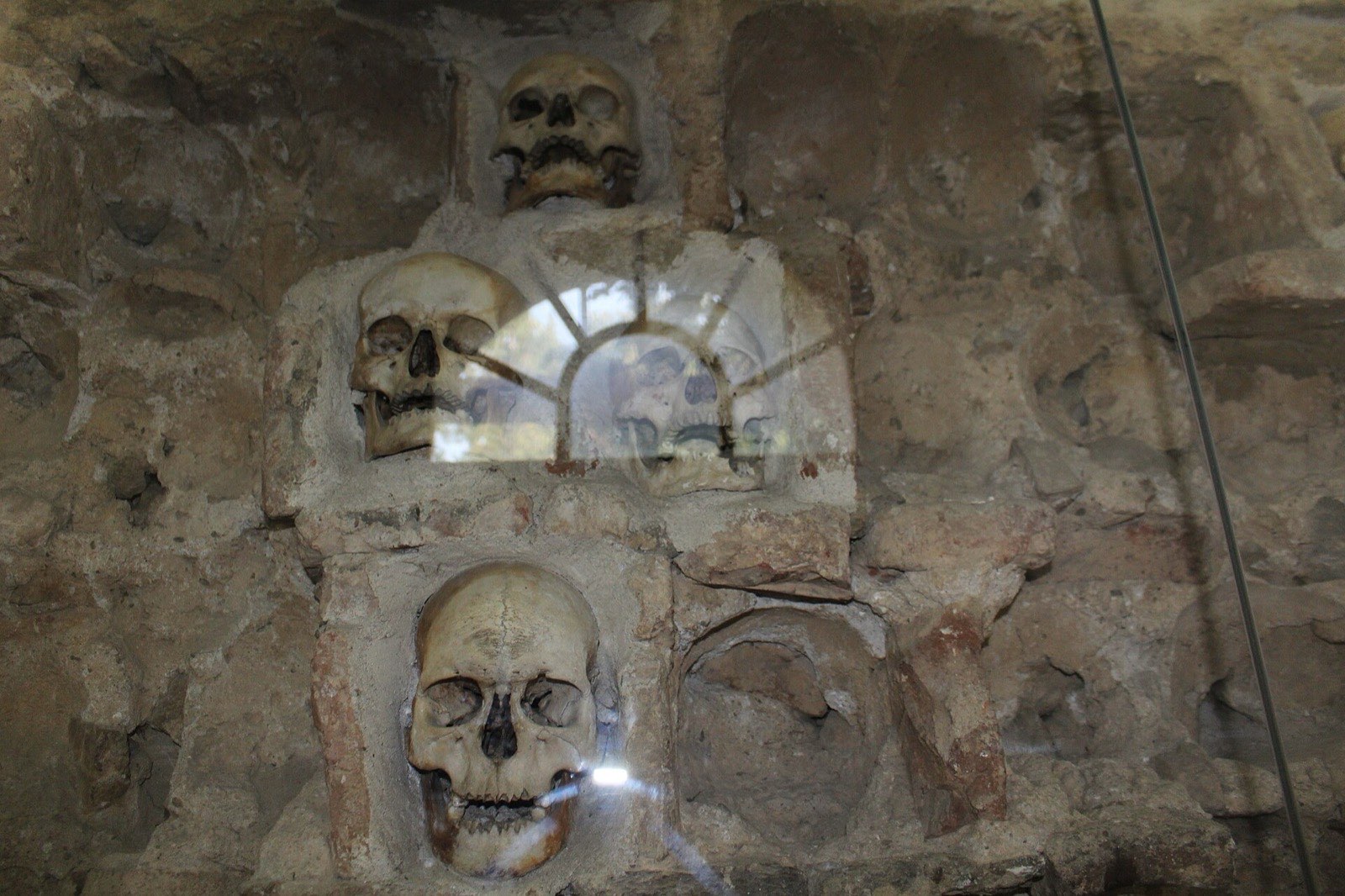
The tower wall with embedded human skulls, inside its chapel
Ćele Kula, Niš — built by the Ottomans in 1809 from the skulls of Serbian rebels, as a warning. It became a shrine instead.
Context

Niš is Roman Naissus, birthplace of Constantine the Great, the emperor who legalised Christianity. Nearly two millennia later it saw one of WWII's first mass concentration-camp escapes, from the Red Cross camp in February 1942. The camp survives almost intact, and it is one of the most sobering places in the Balkans.

Day 09 · Sun 12 Jul

The Iron Gates

local loop, ~120 kmswim day · Srebrno jezero

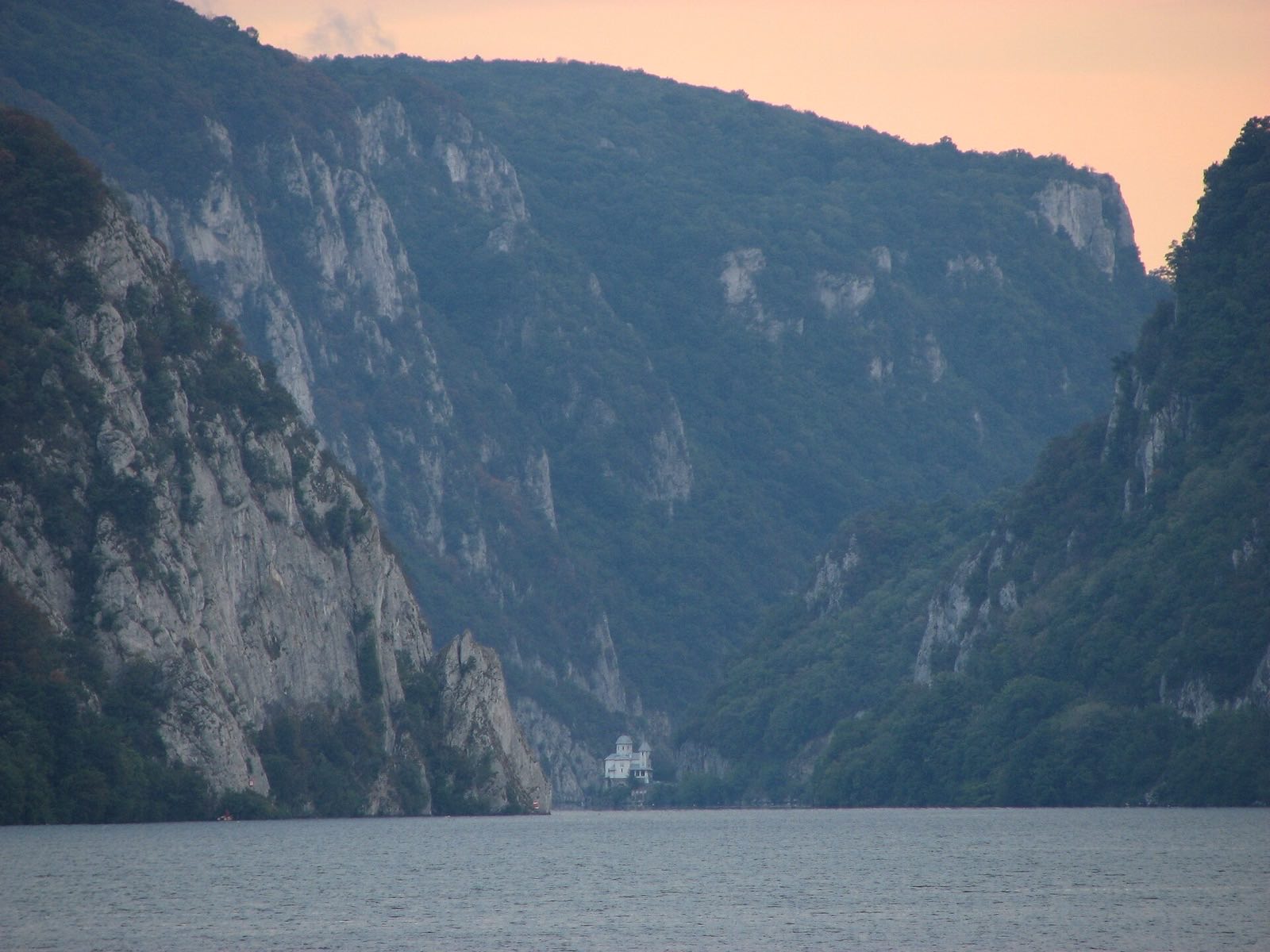
We take the morning boat through the Đerdap gorge — our cabin hosts run the trips themselves — past the Tabula Traiana and under cliffs where the Danube narrows to its deepest point in the whole river. Then Lepenski Vir, and west along the cliff road to Golubac, the fortress rising straight out of the water at the gorge's mouth. We swim at Srebrno jezero, a warm Danube side-arm with sandy beaches, then loop back to the cabin.

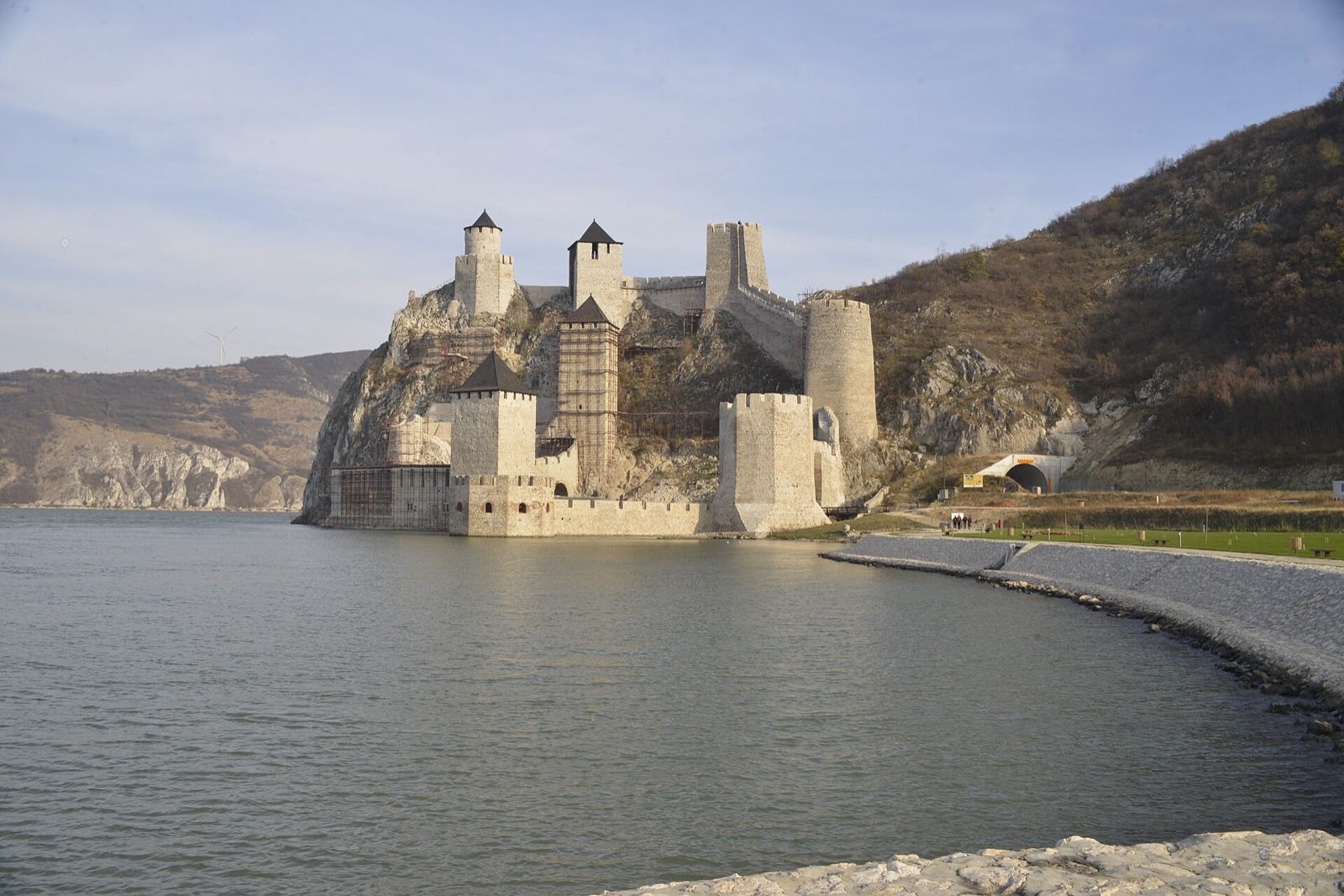
Nine-towered fortress rising from the Danube
Golubac — the lock on the Iron Gates, fought over by Hungary, Serbia and the Ottomans for two centuries.
The Danube squeezed between sheer cliff walls
The Kazan — "the cauldron" — where the Danube runs 90 m deep between the cliffs.
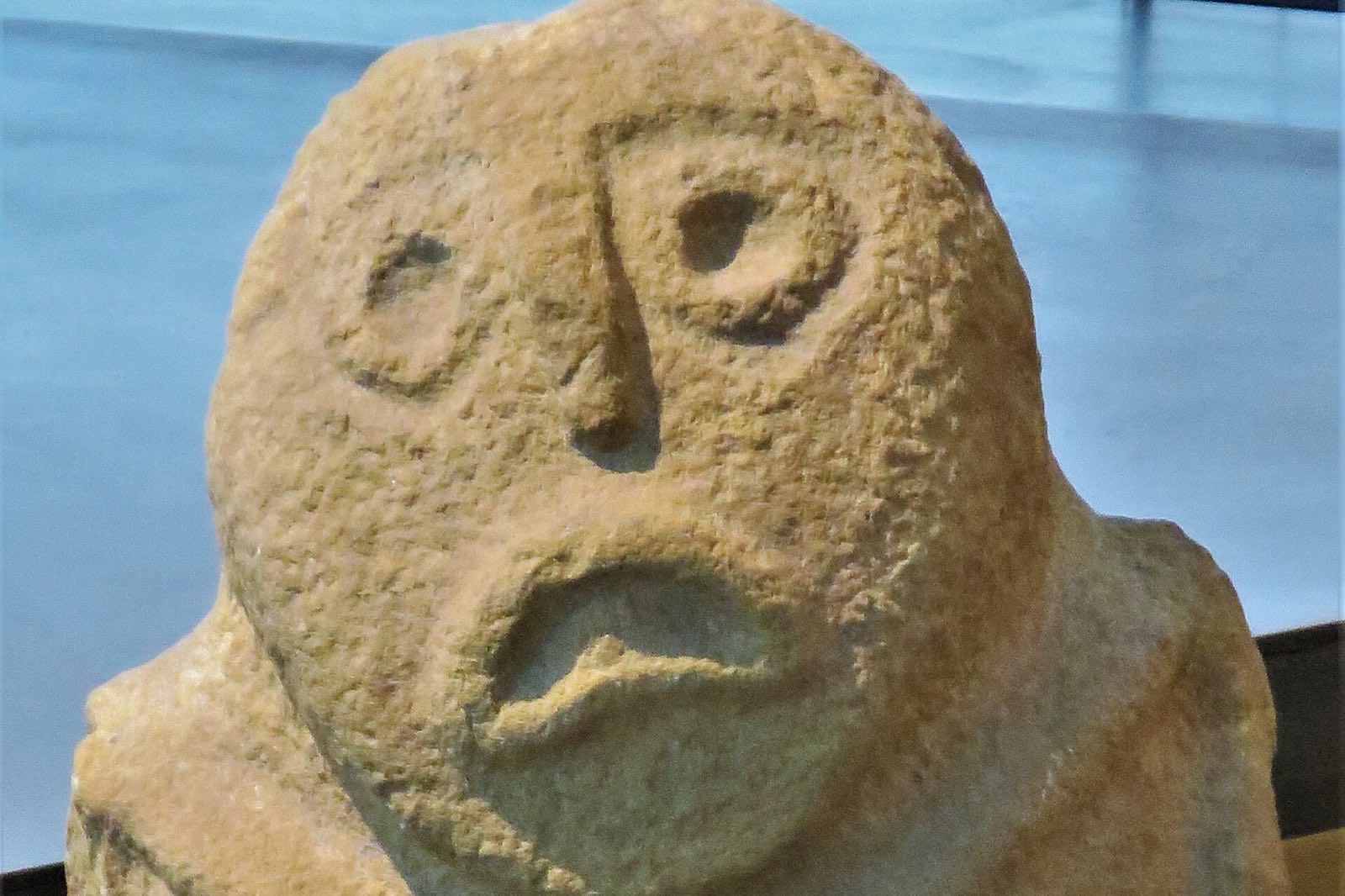
Stone fish-faced sculpture from the excavation
Lepenski Vir — fish-headed idols carved 8,000+ years ago by Europe's first settled culture.
Context

People have lived at this bend of the Danube for over nine millennia. Lepenski Vir's trapezoid houses and fish-god sculptures predate the pyramids by four thousand years. On the cliff opposite, the Tabula Traiana marks where Trajan's legions cut a road into the rock to invade Dacia in 101 AD.

Day 10 · Mon 13 Jul

Romans, one last fortress, and out

~2.5 h + stops
ViminaciumSmederevo fortressDrop carAirport hotel

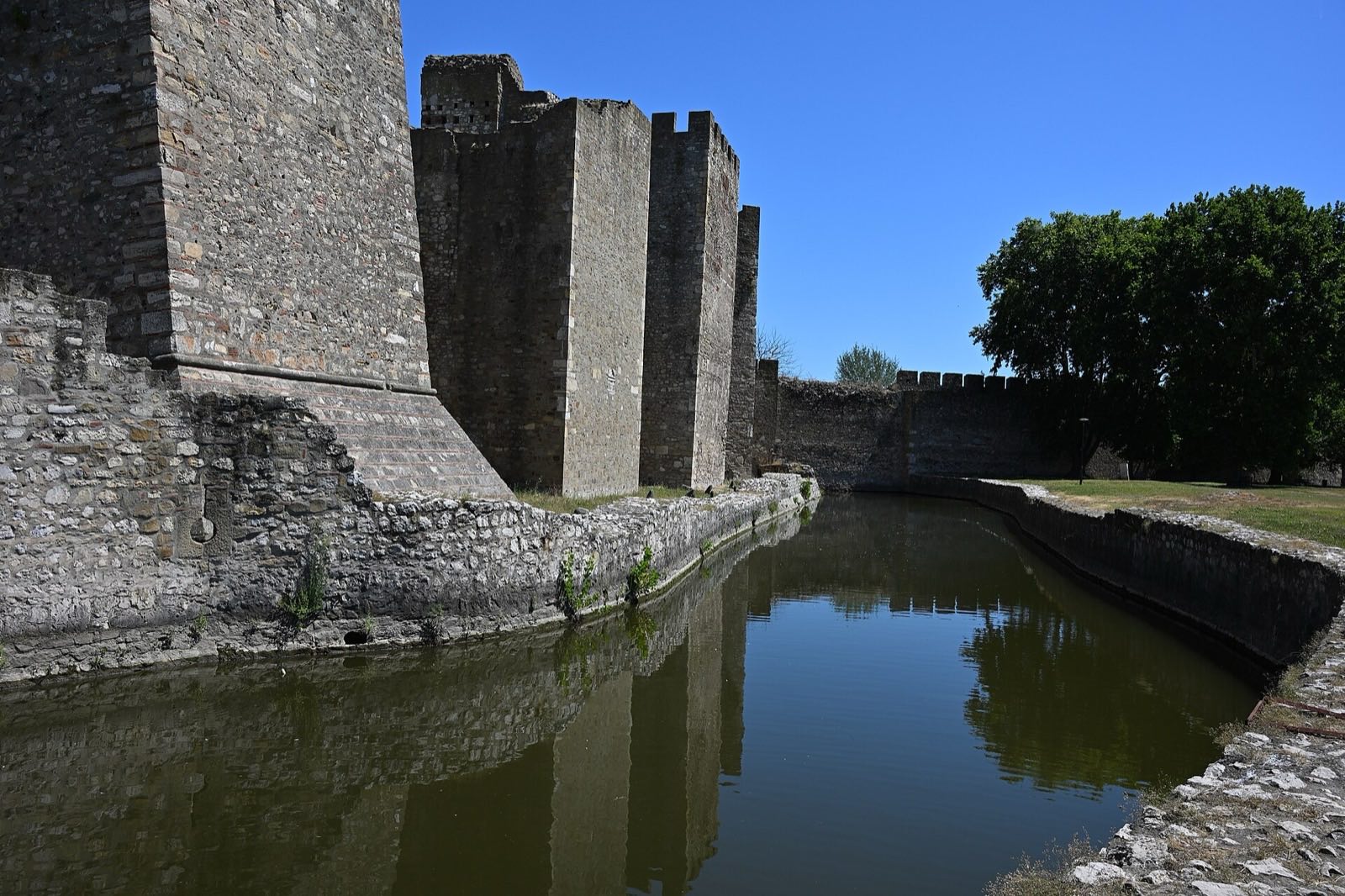
An easy final leg back towards Belgrade, with two stops right on the route. First Viminacium, the excavated Roman legionary city, where the dig turned up a complete mammoth skeleton. Then Smederevo, the largest lowland fortress in Europe, thrown up in just ten years as medieval Serbia's last capital. We drop the car in Belgrade and sleep at the airport hotel.

Long crenellated walls and towers on the Danube bank
Smederevo — built 1428–1439 as the last capital of Serbia before the Ottoman conquest; it fell in 1459.
Context

Viminacium was the capital of Roman Moesia, a city of 40,000 with an amphitheatre, baths and a legion camp. It was abandoned and never built over, which makes it a rare open book for archaeologists. A fitting last stop: the trip ends where the empire's Danube frontier ran.

Tue 14 Jul

Early flight home

Plan B — if the rental car can't enter Kosovo

If Kosovo's off, Days 6–8 swap to a "deeper Serbia" branch: a second night around Novi Pazar and Studenica, then east via Niš to Gamzigrad (Felix Romuliana), a UNESCO Roman imperial palace out in open farmland, plus an extra night on the Danube. Same rhythm, no borders.

Water

Where we swim

We get no coastline, but there are lakes, river beaches and one warm Danube side-arm. Rule of thumb: lowland water is warm, mountain reservoirs are a cold plunge.

Day 2 · warm

Štrand, Novi Sad

The famous sandy Danube city beach. Full summer scene.

Day 4 · cold

Lake Perućac

A small beach on the Drina reservoir. The water runs cold off the dam, so we keep it short.

Day 3–5 · cold

Zaovine lake

Right below the cabin. Mountain water: a plunge, not a lounge.

Day 9 · warm

Srebrno jezero

A closed-off Danube arm with sandy beaches — the trip's proper warm swim day.

The fine print

Practical notes

The border, in one rule

  • Enter and exit Kosovo via Serbia proper (we use Merdare). Never route through Montenegro/Albania mid-loop — re-entering Serbia after that counts as illegal entry.
  • The rental car needs written permission for Kosovo. We chase that down before we leave; if it can't be sorted, we take Plan B below.
  • Buy Kosovo third-party insurance at the crossing: ~€15–30, cash.
  • Avoid the northern crossings near Mitrovica; that's the tense zone.

Driving

  • Mountain roads in the west are slow — trust the time estimate, not the kilometres.
  • Uvac access road: ignore the GPS shortcut; stay on asphalt until it ends.
  • Headlights on at all times; tolls on the motorways (cash/card).

Booking priorities

  • Zaovine cabin first — small supply, peak July, EXIT weekend pressure. Free cancellation.
  • Uvac boat trip — reserve ahead, morning slot.
  • Danube cabin (hosts run the gorge boat trips).
  • Airport hotel for the final night — early flight on the 14th.

Small print

  • EXIT festival: 9–12 Jul in Novi Sad — we're there the weekend before.
  • Monasteries & Dečani: shoulders/knees covered; passports at Dečani.
  • Currency: Serbian dinar; Kosovo uses the euro.
  • Protests happen in Belgrade — interesting to read about, not to walk into.